Digital Marketing Strategy
Digital Marketing: A Practical Guide for Growing Your Business
You don’t need a huge marketing budget to start getting found online. You need the right basics, a clear message and the patience to improve what actually brings enquiries.

For a growing business, digital marketing can feel like a long list of things to do: build a website, post on social media, work on SEO, run ads, write blog posts, reply to messages — and somehow keep the actual business running.
The good news is that you don’t have to do everything at once. A better approach is to build a simple system where each part supports the next. Your website explains what you offer. Search helps the right people discover you. Content answers their questions. Social media builds trust. And clear contact options make the next step easy.
This guide walks through that system step by step, with practical checks you can apply this week and a simple 30-day plan to get started.
- Fix your website foundations before paying for more traffic.
- Create content around the real questions your customers ask.
- Treat paid ads as a measured test, not a magic button.
- Track what happens after the click, then improve one thing at a time.
1. Start with a website that answers basic questions
Before worrying about rankings, make sure a visitor can quickly understand four things: what you do, who you help, where or how you serve customers, and how to get in touch.
If you serve specific cities or regions, mention them naturally where they genuinely apply — on the relevant service pages and your contact page — rather than repeating a place name throughout every page. If you work online or across different locations, say so clearly. Either way, write for a real person first.
Open your homepage on your phone and give yourself five seconds. Can you tell what the business does and what you should click next? If not, start there.
A strong small-business website usually includes:
- A clear headline that says what you offer and who it’s for
- A dedicated page for each main service or product category
- Honest proof you can genuinely show — photos of your work, your process, real reviews or examples
- Visible contact options on every page, such as a form, email address or phone number
- Fast loading and easy navigation on mobile devices
2. Make search visibility part of the foundation
Search engine optimization (SEO) helps people find you when they are actively looking for what you offer. You don’t need to master every technical detail to get the basics right:
- One main topic per page. A dedicated service page can answer a searcher’s questions far better than one crowded homepage.
- Unique titles and descriptions. Each page needs a clear title and meta description that reflect what’s actually on it.
- Technical health. Make sure important pages can be indexed, load quickly and work well on mobile.
- Google Search Console. Verify your website to see which searches show your pages, which pages get clicks and whether Google reports any problems.
If you serve customers in specific areas
Local visibility matters when people search for a service near them. Create and complete a Google Business Profile, keep your business name and contact details consistent across your website and other listings, choose accurate categories and ask happy customers for genuine reviews. Never buy or invent reviews — it damages trust and breaks platform rules.
If you’d like expert help, our SEO services cover technical fixes, on-page optimization and content planning.
3. Create content around real customer questions
This is where a blog becomes genuinely useful. Instead of writing articles just to “add keywords”, start with the questions customers actually ask — in emails, calls, messages and sales conversations. For example:
- How much does this service usually cost, and what affects the price?
- How long does the process take?
- What’s the difference between option A and option B?
- What should I check before choosing a provider?
- What mistakes should I avoid?
A good article answers the question directly, then adds context: examples, simple explanations, pros and cons and practical next steps. That makes the page useful even before it earns search traffic — and gives your sales and social channels something valuable to share.
To turn a question into a strong article, answer it within the first few paragraphs, use clear subheadings, include an example from your field, link to the relevant service page and finish with a clear next step. Our content marketing service follows exactly this approach.
4. Use social media to build trust, not just reach
A social profile is often one of the first places a potential customer checks after finding your business. Use it to show your work, explain your process, share useful tips and answer common questions.
You don’t need to sound like a giant brand. A clear explanation in your normal voice can be more convincing than a page full of buzzwords. Content ideas that work for most businesses:
- Before-and-after examples or project walkthroughs (shared with permission)
- Short answers to frequently asked questions
- Behind-the-scenes looks at how you work
- Tips that help customers make better decisions
Consistency matters more than volume. A realistic schedule you can maintain beats an ambitious one you abandon after two weeks. See how we approach social media marketing.
5. Treat paid ads as a test, not a magic button
Google Ads and Meta Ads can help you reach people faster, but the ad is only one part of the journey. If the landing page is confusing or the offer is unclear, more clicks won’t automatically create more customers.
Before you launch, check that you have:
- One clear offer and one clearly defined audience
- A landing page that matches the ad’s message
- Conversion tracking for the action you care about — enquiries, calls or purchases
- A test budget you’re comfortable committing for long enough to learn from
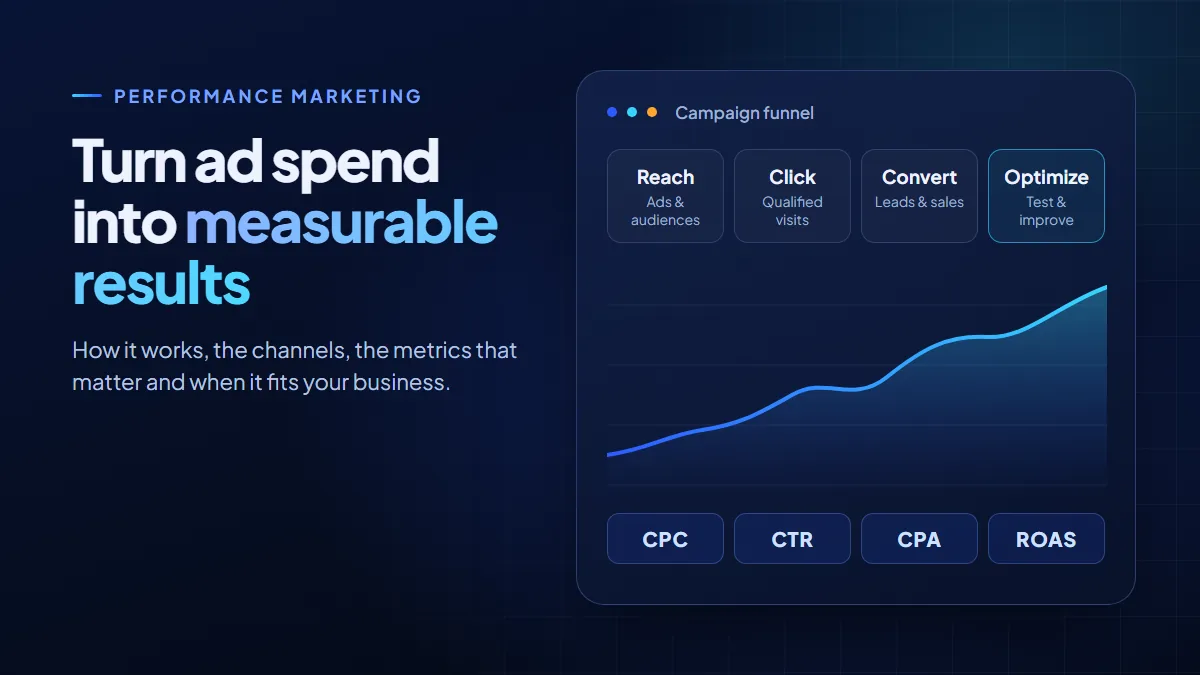
Measure enquiries, calls, form submissions or purchases instead of celebrating clicks alone. Our guide to performance marketing explains the key metrics, and our Google Ads and Meta Ads service can manage campaigns for you.
6. Measure what happens after the click
Traffic is useful, but it isn’t the whole story. Look at what visitors do next: Which pages get attention? Where do people leave? Which search queries bring impressions? Which pages generate enquiries?
- Google Analytics 4 shows how people arrive and what they do on your site. Set up key events for actions such as form submissions and email clicks.
- Google Search Console shows which searches display your pages and how often people click through.
- UTM parameters added to links in emails, social posts and ads help you see which campaigns bring visitors.
Use the data to make small improvements: change one thing, observe the result and keep what works. If your tracking isn’t set up yet, our analytics and conversion tracking service can help.
7. Be patient with SEO and consistent with content
There is no honest shortcut that guarantees a top position in Google. Search visibility depends on many factors, including relevance, content quality, technical accessibility, competition and the overall experience of the page.
What you can control is the quality of the work: publish genuinely useful information, keep your site accessible and fast on mobile, and update important pages when information changes. Over time, that consistency compounds.
A simple 30-day starting plan
| Week | Focus | Actions |
|---|---|---|
| Week 1 | Foundations | Improve your homepage, service pages, page titles and contact options. Verify your site in Google Search Console. |
| Week 2 | Visibility | Set up or improve your business profiles — including Google Business Profile if you serve local customers — and publish your first genuinely useful article. |
| Week 3 | Trust | Publish two helpful social posts and one article that answers a common customer question. |
| Week 4 | Measurement | Review Search Console and analytics data, then improve the pages people actually use. Decide whether a small paid ads test makes sense. |
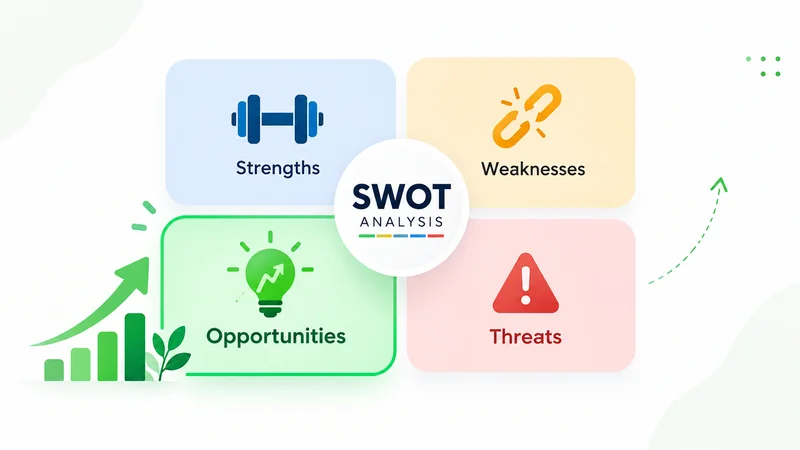
If you’re unsure which opportunities to prioritize, a quick SWOT analysis of your opportunities can help you decide.
Common digital marketing mistakes to avoid
- Trying every channel at once instead of doing a few things well
- Sending paid traffic to a homepage that doesn’t match the ad
- Measuring likes and impressions instead of enquiries and sales
- Copying competitors’ content instead of answering your own customers’ questions
- Stopping after a few weeks, before there’s enough data to learn from
Frequently asked questions
Which digital marketing channel should a small business start with?
Start with your website and search visibility, because every other channel sends people there. Then choose one or two channels where your customers already spend time — such as search, social media or email — and use them consistently.
How much should I spend on digital marketing?
It depends on your goals, margins and competition. Many businesses start by investing time in the foundations — website, SEO basics and content — and add a modest paid test budget once tracking is in place.
How long does digital marketing take to work?
Paid ads can bring traffic within days, while SEO and content usually take months to build momentum. The timeline depends on your competition, your starting point and how consistent you are.
Conclusion
Digital marketing becomes much less confusing when you stop treating it as a collection of random tasks. Build the foundation, answer real questions, measure what happens and improve one step at a time.
If you’d like a second opinion on where to start, you can request a free strategy review from Aavesh Marketing.